
RazorSafe Blade Profiles Explained: 9 Profiles, 5 Sizes, One System
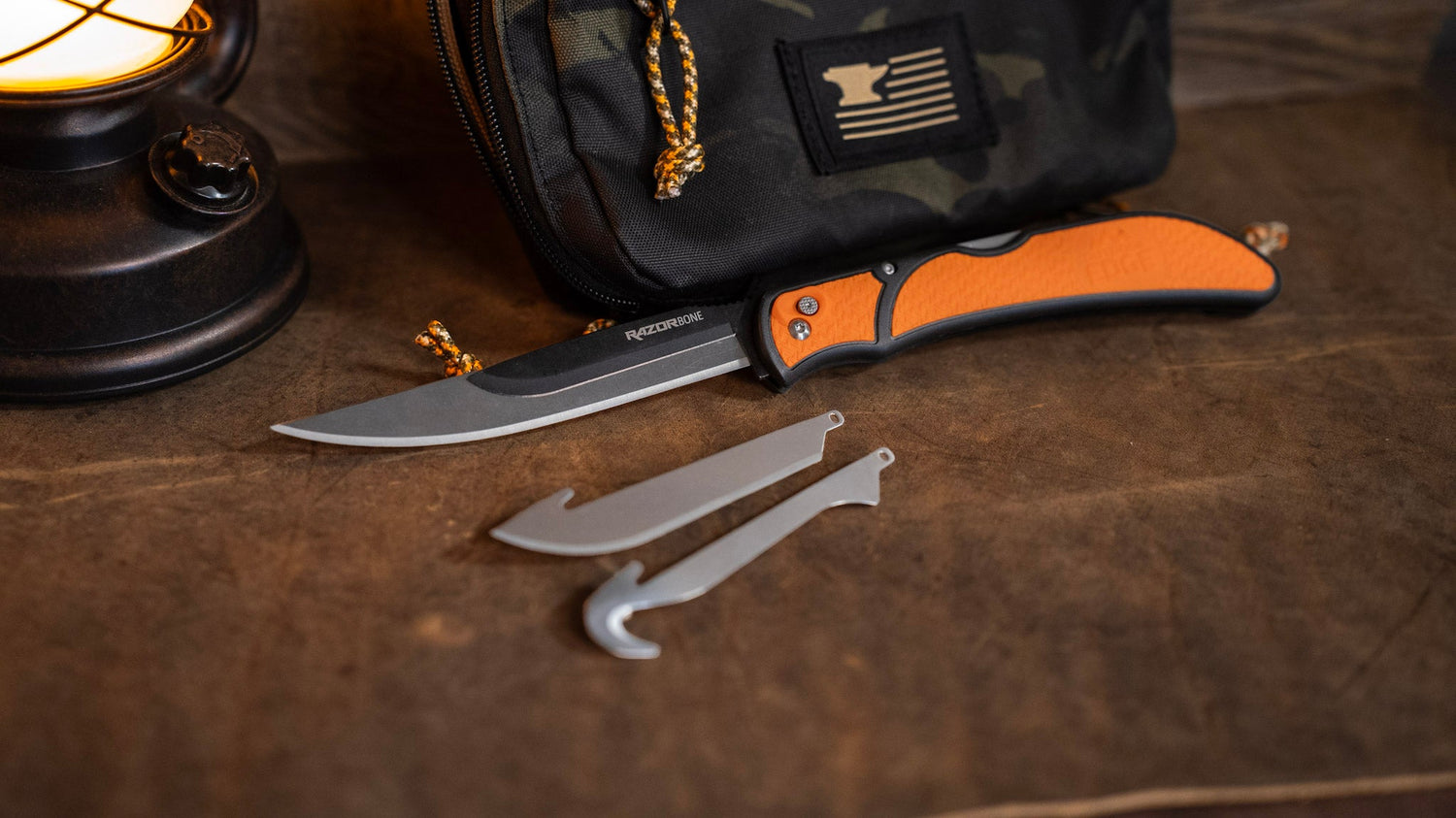
Last updated: July 2026The RazorSafe blade lineup looks bigger than it is. Nine profiles, five size codes, one handle system. The trick is figuring out which blade goes on which knife, and which one actually belongs in your pack at four in the morning. This is the field guide.
How RazorSafe blade sizing works
The number on a RazorSafe blade pack is the blade size code, not the blade profile. The size code tells you which knife the blade fits. The profile tells you what the blade is shaped to do. You match them in that order. Knife first, then job.
Five codes cover the entire system:
- 220: Smaller pack knives. Light, fast, EDC oriented.
- 250: Mid sized hunting and EDC blades. Common on the RazorLite folder.
- 300 and 301: 300 is the dedicated 3.0" length in a variety of profiles. 301 is the square tip utility blade for boxes, drywall, rope, and jobsite cuts.
- 350: The flagship size. Drop-point and gutting hook, all live here. The RazorPro family runs on 350.
- 500: Five inch boning and fillet. Built for processing tables, not pack-outs.
Buy the knife once. Buy the blades to fit. The profile decision is what changes from job to job, not the handle in your hand.
The 6 RazorSafe blade sizes, in detail
Here is what each profile is built for, where it earns its keep, and what task it should not get pulled into.
220 (2.2")
The smallest in the system. Built for the Razor Mini class of knives. Thin profile, fine point. Best on small game, dressing birds, and any cut where you want maximum control with minimum knife. It is not the blade for elk hindquarters. It is the blade you actually have on you for discreet EDC set ups.
250 (2.5")
Mid sized blade that runs on the RazorLite folder and Razor APX. Most hunters who carry one knife in their pack carry this one for fine detailed work or looking to cut excess weight. It will field dress a whitetail start to finish. It will skin a hung deer if you swap blades twice. The point sits low on the spine, which keeps you from poking through the gut wall by accident in the first cut. Field dressing technique matters more than blade size, but this is the all-purpose answer for the deer hunter who only wants one knife.
300 (3.0")
The 300 is purpose size of blade profiles, built for taxidermy, field dressing, outdoor work and EDC. Three inch blade, are available in drop-point, serrated drop point, sheepsfoot, tanto, and caping. The caping blade features a fine tip for detailed work. You use it for the tight work around the eyes, ears, lips, and nose where a 350 drop-point is too big to maneuver and too aggressive to control. If you plan to mount a buck, you need a 300 in the pack. Caping a deer for a shoulder mount is its own skill, and the wrong blade here ruins a $700 mount before the taxidermist sees it.
301 (3.0" Utility)
The 301 is the same size pocket as the 300 but with a square, angled work tip. This is the contractor blade. Sheetrock, carpet, stripping wire jackets, scoring cardboard, opening crates. Some hunters keep one in a truck-knife handle for camp and pack repairs. It is not a hunting blade. It is the reason your hunting blade stays a hunting blade.
350 (3.5")
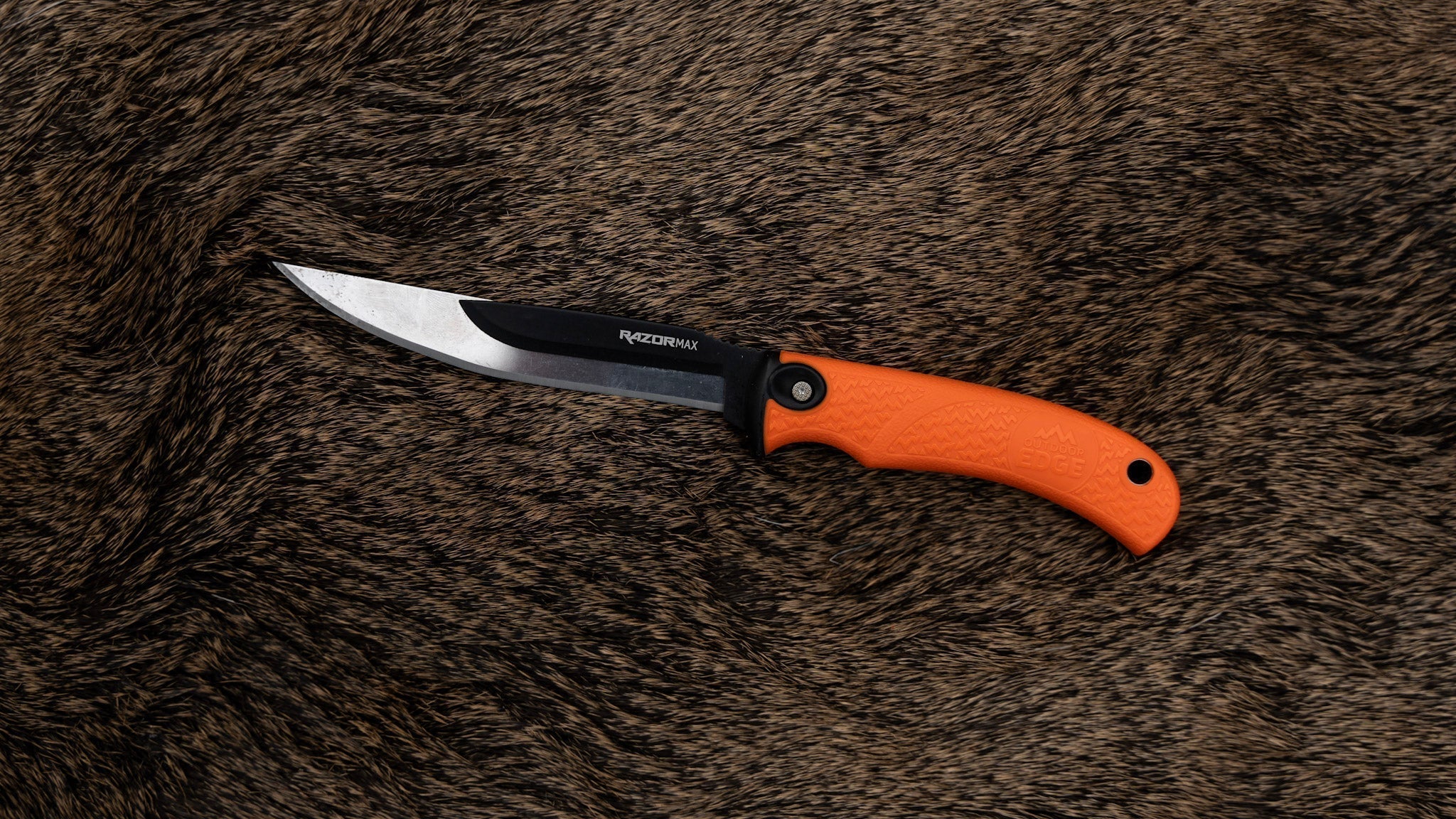
The workhorse that is available in drop point and gutting. The 350 drop-point is the blade most RazorMax owners run by default. Long enough to skin and quarter, stout enough to handle bone contact during disjointing, sharp enough out of the package to push through a hide without leaning on it. If you only stock one profile in 350, stock this one. The hooked tip is the blade most hunters underrate until they use it once. Slip the hook under the skin at the brisket, lift, run it down the belly. The point cannot punch through the gut.
500 boning and fillet
Five inches of flex. Narrow, tapered, slightly springy down the spine. Built for the processing table, not for the field. Run it under silver skin, around joints, along the bone. Boning out a deer at home is faster and cleaner with a 500 than with any fixed knife you own. Same blade doubles for fillet work on walleye, salmon, and trout, which is how a lot of houses end up with two RazorSafe handles.
Which profile for which task
Pick the profile by what is in front of you, not by what the catalog page calls it. This matrix collapses the decision down to one column.
| Task | Best profile | Size code | Why |
|---|---|---|---|
| Field dressing a deer | Drop-point or gutting hook | 250 , 300 or 350 | Gut cavity opens cleanly with the hook; drop-point covers everything else |
| Skinning a hung deer | Drop-point | 350 | Long enough to ride the hide line, stout enough for shoulder seams |
| Caping for a shoulder mount | Caping | 300 | Fine point clears the head, neck, and shoulders without nicking the cape |
| Quartering an elk in the field | Drop-point | 350 | Bigger animal, more bone contact, the 350 has the spine to handle it |
| Boning out at home | Boning and fillet | 500 | Five inches of flex follows the bone instead of cutting straight through muscle |
| EDC | Sheepsfoot or Tanto | 300 | Flat edge does the work right under the cut, blunt tip stays out of trouble |
| Trimming silver skin | Boning and fillet | 500 | Flex lets you ride flat against the muscle and lift the membrane |
| Filleting walleye or trout | Boning and fillet | 500 | Same blade as boning, exactly what fillet work asks for |
| Camp and DIY work | Utility (301) | 300/301 | Box knife, rope, line, gear repair. Keeps your hunting blade clean |
How to stock a hunting season's worth of blades
Most hunters under-buy and then ration. The right answer is to buy by the season, not by the trip.
- Map the season: Count the number of animals you actually expect to take. Whitetail tags, hog hunts, waterfowl trips that involve breast work, fish you plan to fillet. Be honest, not optimistic.
- Set the per-animal budget: A whitetail field-dressed and skinned takes 2 to 4 blade swaps if you are working clean. Add 1 to 2 more if you bone it out. An elk doubles the count. A hog comes in around the same as a deer.
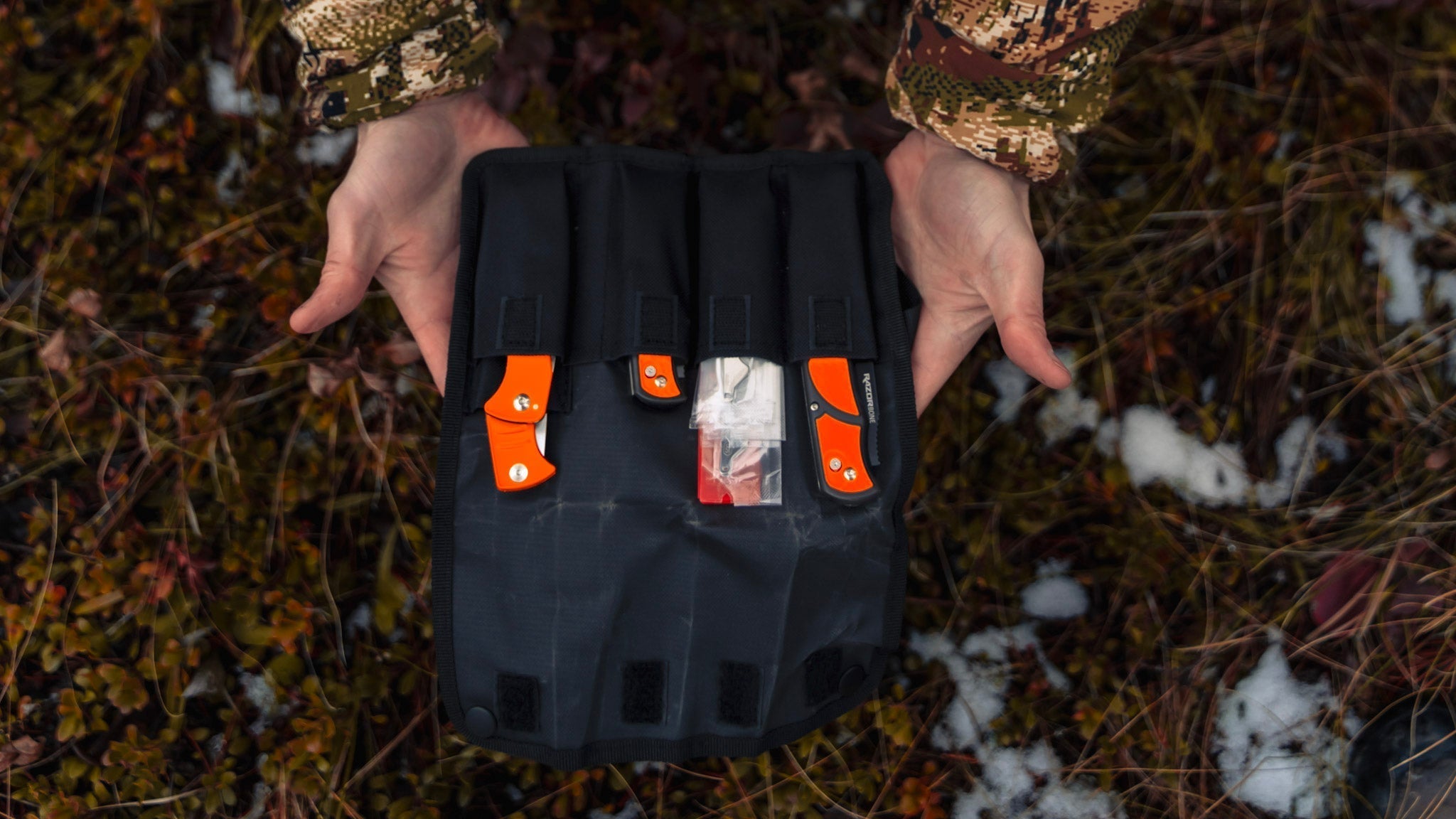
- Buy two profiles per knife: If you run a RazorMax, stock 350 drop-points and 350 gutting hooks. If you run a RazorLite, stock 250 drop-points. If you cape, add a 300. If you process at home, add a 500.
- Round up by one pack: A pack is 4 to 6 blades. Buy one more pack than your season math says. The cost of an extra pack is $14.99 to $18.99. The cost of running out at the gambrel is the rest of your hunt.
- Store smart: Keep packs sealed in the original sleeve. Throw the open pack in a dry pelican-style box with silica. The 420J2 steel resists corrosion well, but no steel likes being wet for two weeks.
Black-oxide coated blades: when they're worth it
The coated blades cost the same as a standard pack. The question is whether the black-oxide buys you anything that matters in the field.
Three honest answers:
- Yes, on wet hunts. Late season waterfowl, river-bottom hog hunts, snow-day elk where the knife goes from skin to sheath wet, the coating slows surface oxidation between cleanings.
- Yes, on long backcountry trips. If you are seven days into a Wyoming archery hunt with no way to dry gear, the coating is cheap insurance.
- No, on a normal weekend hunt. A standard 420J2 blade you wipe down and dry at the end of the day will outlive every blade you swap during the season.
The coating is not a different steel. It is the same 420J2 stainless with a finish on top. The geometry, hardness, and edge retention are identical to the uncoated version.
Where to go next
If you are still picking your knife, start with the RazorMax vs RazorLite comparison. If you are deep into the cluster already and want the workflow side of this, walk through skinning, boning, and caping in the order a deer asks for them. The blade-pack collection is right here when you are ready to stock up: RazorSafe replacement blade packs.
RazorMax · 220-code blades · 300-code caping blades · 350-code blades · 500-code boning and fillet blades
Frequently asked questions
How many RazorSafe blade profiles are there?
Nine profiles across five size codes. Drop-point in 220, 250, and 350. Caping in 300. Utility in 301. Gutting hook and sheepsfoot in 300. Boning and fillet in 500. A black-oxide coated drop-point in 250-350.
What does the size code on a RazorSafe blade pack mean?
The size code tells you which knife the blade fits. 220 fits the smaller pack knives, 250 fits the RazorLite, 300 and 301 fit the dedicated caping and utility handles, 350 fits the RazorMax and most full-size hunting knives, 500 is the five inch boning and fillet handle. Profile is separate. You pick the size for the knife, then pick the profile for the job.
Which RazorSafe profile is best for field dressing a deer?
The 350 gutting hook for the belly cut, then the 350 drop-point for everything else. If you are running a RazorLite, the 250 drop-point covers the whole job in 2 to 4 swaps.
Do I need a separate caping blade?
If you plan to mount the deer, yes. The 300 caping profile is built for the tight work around the head and shoulders. A drop-point can do most of a cape, but the eyes, ears, and nose are where the 300 saves the cape from a ruined mount.
Are black-oxide coated RazorSafe blades worth the extra cost?
For wet, long, or backcountry hunts, yes. The coating slows corrosion and reduces drag. For normal weekend hunts where you wipe and dry the blade at the end of the day, the standard 420J2 blade is fine. Same steel, same edge, same hardness either way.
How many blade packs should I buy for a hunting season?
Plan on 2 to 4 blade swaps per deer-sized animal, double that for elk. A pack is 4 to 6 blades. Two animals through a single knife will use most of one pack. Buy one more pack than your math says. The extra pack costs $14.99 to $18.99 and prevents running out mid-season.
Author: Outdoor Edge Pro Staff. 2026-07-21.

Leave a comment
This site is protected by hCaptcha and the hCaptcha Privacy Policy and Terms of Service apply.