


RazorSafe vs. SawSafe: When You Need a Bone Saw, Not a Knife
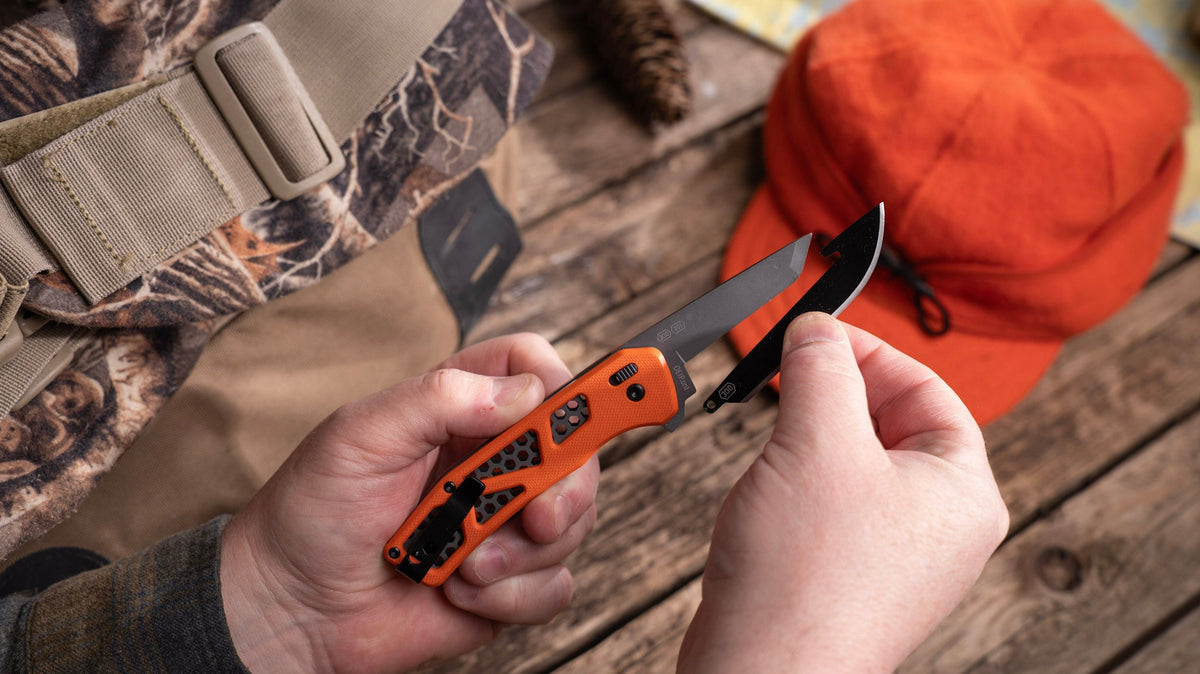
Last updated: November 2026RazorSafe is Outdoor Edge's replaceable knife blade system. SawSafe is Outdoor Edge's replaceable bone-saw blade system. They share the same swap mechanism, but the tools they create are not interchangeable. A knife slices and skins. A bone saw cuts through ribs, pelvis, and sternum. Most big-game hunters need both.
The 1-sentence difference
RazorSafe is for cutting. SawSafe is for sawing. The first slices through tissue with a single-pass edge. The second cuts through bone with a toothed reciprocating action. Everything else flows from that one-sentence difference.
What RazorSafe does
RazorSafe handles run flat, single-edge knife blades in 9 profiles across 5 size codes. The blades are 420J2 stainless at Rockwell C 54 hardness. They are designed for hide removal, gutting, skinning, caping, quartering, boning, and filleting. They will not cut clean through pelvic bone or sternum. They are not meant to. A knife edge that contacts bone hard enough to cut through it will chip, roll, or fail.
The RazorSafe lineup includes the RazorMax fixed-blade, the RazorLite folder, and a range of smaller handles for caping and EDC.
What SawSafe does
SawSafe handles run replaceable saw blades with aggressive bidirectional teeth. The blades cut through bone, hard cartilage, antler, and frozen meat. They are designed for the moments in big-game processing where a knife is the wrong tool. The lineup is smaller than RazorSafe because the use cases are narrower, but the engineering follows the same swap-not-sharpen principle.
A SawSafe blade does not slice. The toothed edge will tear hide and shred muscle if you try to use it for knife work. The saw is for bone. The knife is for everything else.
When the saw matters more than the knife
Three field moments where a knife alone is not enough:
- The pelvic bone. Splitting the pelvis opens the cavity for full evisceration. Some hunters skip it with smaller game and work around it. For elk, big bear, large hogs, and any animal you want to break down clean, the pelvic split is faster with a saw than with a hatchet or a knife pried into the joint.
- The sternum and brisket. Cutting the sternum lengthwise gives access to the chest cavity for cooling. A knife can split the soft cartilage of younger animals. Older animals or bigger species have bone that needs a saw.
- The ribcage during quartering. Cutting between ribs to separate quarters, or cutting through ribs to access tenderloins, is saw work on most adult ungulates. Wrong tool, wrong day, wrong result.
For a deer-sized animal, a hunter can usually finish field dressing without a saw if they know joints. For elk, bear, or any animal over 300 pounds, a saw is not optional gear.
The modular option: Razor APX runs both
Outdoor Edge designed the Razor APX as a modular handle that accepts both RazorSafe knife blades and SawSafe saw blades. One handle, one swap mechanism, two tool modes. For backcountry hunters, mountain hunters, and anyone trying to cut pack weight, the APX is the answer to needing both tools without carrying two handles.
The APX is not a compromise. The handle is shared, but the blades are the same blades that ship for the dedicated RazorSafe and SawSafe handles. You get full knife performance and full saw performance from one piece of hardware.
Side-by-side comparison
| Attribute | RazorSafe | SawSafe |
|---|---|---|
| Tool type | Replaceable knife blade | Replaceable bone-saw blade |
| Blade material | 420J2 stainless steel at RC 54 | Hardened bidirectional saw teeth |
| Best cuts | Hide, fat, muscle, hide tubes around joints | Ribs, pelvis, sternum, antler, frozen meat |
| Worst use | Cutting through bone | Slicing hide or muscle (will tear, not cut) |
| Replaceable blade cost | $2.50 to $4.50 per blade | Comparable per-blade range |
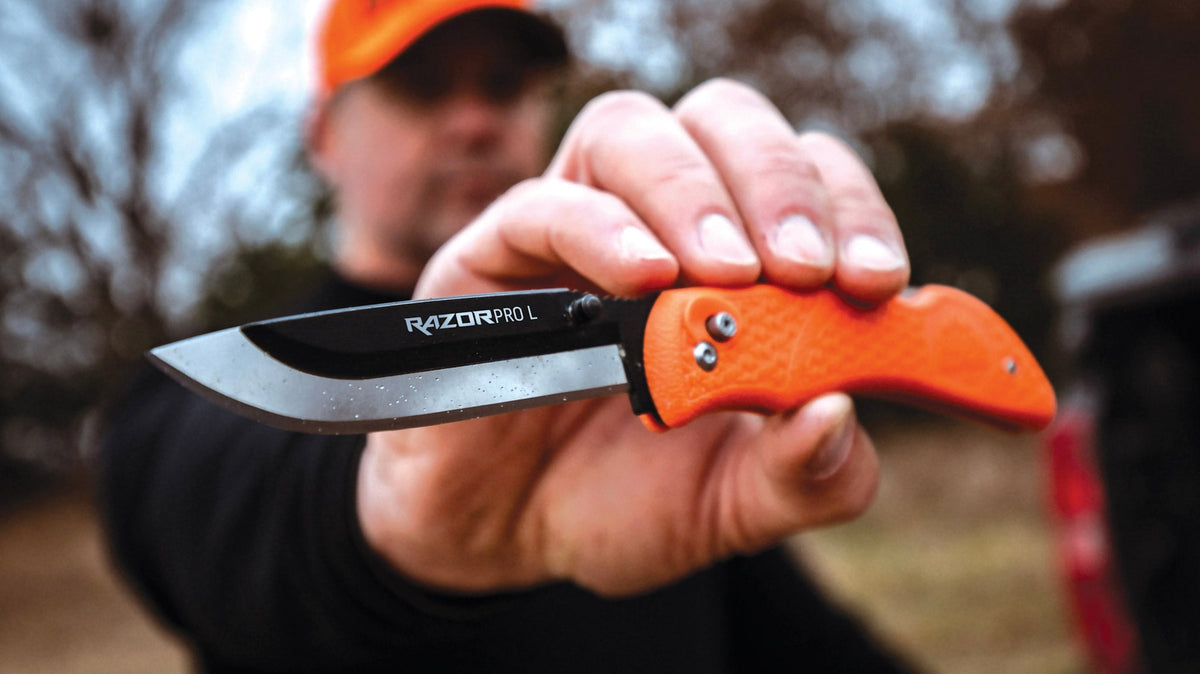
| Compatible handle | RazorMax, RazorLite, RazorPro, Razor APX, and others | Razor APX, Razor HTS, and Razor XD |
| Where it lives in the kit | Primary cutting tool, always with you | Saw is added when big-game work is on the calendar |
| Blade interchangeable across systems | No. Different blade geometry, different mount. | No. Different blade geometry, different mount. |
Where to go next
If you want one handle that bridges both systems, start with the Razor APX. If you already run a RazorSafe knife and need a saw, browse the SawSafe collection. For the modular-handle story in more detail, read the Razor APX deep dive. For the knife-blade side, the 9 RazorSafe blade profiles guide covers every blade in the system.
Frequently asked questions
What's the difference between RazorSafe and SawSafe?
RazorSafe is Outdoor Edge's replaceable knife blade system. SawSafe is Outdoor Edge's replaceable bone-saw blade system. RazorSafe blades cut hide, fat, and muscle. SawSafe blades cut bone, antler, and frozen meat. They share the same swap-on-dull philosophy and similar swap mechanism, but the blades are not interchangeable.
Do you need a bone saw to process a deer?
Not strictly. A skilled hunter can field dress and quarter a deer-sized animal without a saw by working joints rather than cutting through bone. For larger animals (elk, bear, big hogs) or for splitting the pelvis and sternum cleanly, a saw is the right tool. Most serious big-game hunters carry both.
Can a RazorSafe knife cut through bone?
It will cut soft, young cartilage and small joint capsules. It will not cut through adult pelvic bone, sternum, or rib. The 420J2 blade at RC 54 is engineered for hide, fat, and muscle. Forcing it through bone will chip or roll the edge and is unsafe. Use a saw for bone.
What does SawSafe cost vs. RazorSafe?
Both systems use replaceable blades in a similar per-blade price range. Handle pricing varies by model. The Razor APX bridges both systems at one handle cost, which makes it the most efficient option for hunters who need a knife and a saw without buying two dedicated handles.
Are SawSafe and RazorSafe blades interchangeable?
No. The blade geometry and the mounting differ between the two systems. The Razor APX accepts both blade types because the handle is engineered to bridge them. A standard RazorSafe-only handle will not accept a SawSafe blade and vice versa.
What hunts require a bone saw?
Elk, bear, mountain goat, moose, and any large hog hunt are the obvious cases. Pelvic-split and sternum-split work is standard procedure. For backcountry pack-out work where you bone everything off the carcass, a saw also speeds up rib and spine separation. For close-to-the-truck whitetail hunts, you can often skip it.
Author: Outdoor Edge Pro Staff. 2026-11-02.

Leave a comment
This site is protected by hCaptcha and the hCaptcha Privacy Policy and Terms of Service apply.