
Best Outdoor Edge Knife for Elk Hunting (2026 Guide)
Last updated: August 2026Elk are not deer. A bull elk doubles the body weight, triples the bone contact, and asks more of your knife in one day than a whitetail asks all season. This is the 2026 answer for the knife setup that handles a bull from the bottom of a canyon to the meat freezer at home.
Why elk processing is different from deer
An elk is not a big deer. Treat it like one and you will be on your second blade before you finish the first hindquarter. Here is the honest comparison, side by side, before we get to the knife picks.
| Processing demand | Whitetail deer | Bull elk |
|---|---|---|
| Field-dressed body weight | 120 to 200 lb | 400 to 600 lb |
| Hide thickness | Thin to medium | Thick, hair coarser, tougher under the cut |
| Bone contact during quartering | Light. Disjoint at the joints. | Heavy. Bigger joints, denser bone, more leverage |
| Typical processing location | Gambrel at home or camp | Often field-quartered, packed out |
| Blade swaps per animal | 1 to 2 | 2 to 4, plus 1 to 2 for boning at home |
The verdict: RazorMax + 500-code boning blade
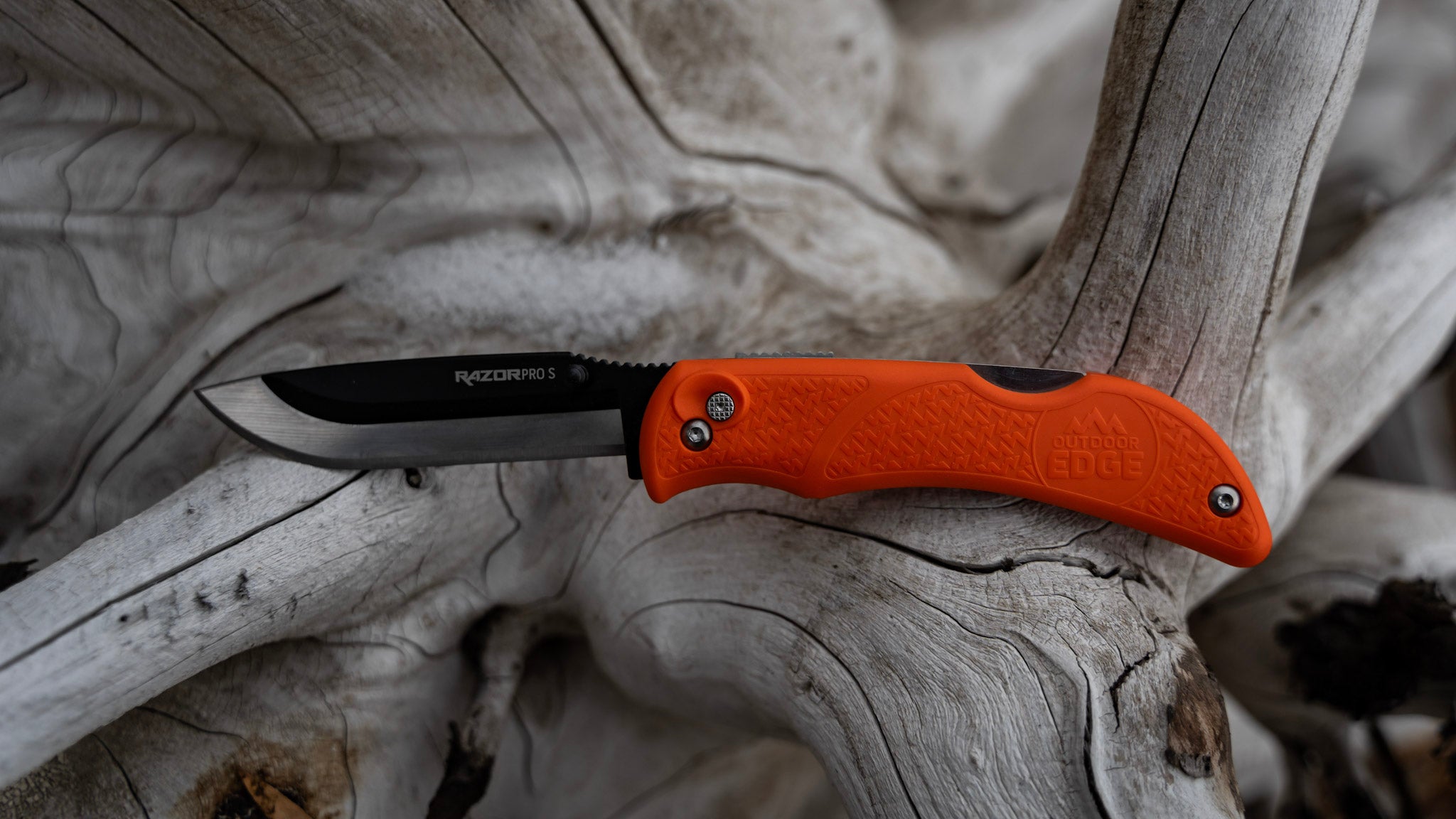
RazorMax
The RazorMax is the only fixed blade in the RazorSafe lineup with the spine and length to take on a bull. The 3.5 inch 350 drop-point handles the entire field workflow. Open the chest cavity, work through the hide, follow the bone seams when you separate quarters. The blade is stout enough to lever against a joint without snapping, and the rubberized TPR handle stays tacky when it is covered in blood and snow. The gutting hook profile is the other 350 blade you want in the kit. On a bull, the belly cut is longer and the gut wall is denser. The hook lets you walk that cut without fighting the point.
500-code boning and fillet blade
The 500 is the unsung hero of elk processing. Five inches of flex. The blade follows the bone instead of cutting through muscle, which means you take more meat off a hindquarter than you would with any field knife. For a 600 pound bull, that difference adds up to 20 to 30 pounds of recovered meat over the full processing job. Run it on its own RazorSafe handle. Use it at the camp processing table or back at home when you are working through the quarters. The boning workflow for elk is the same as the deer version, scaled up. The 500 makes it possible without losing meat to the bone.
The full quartering workflow for elk
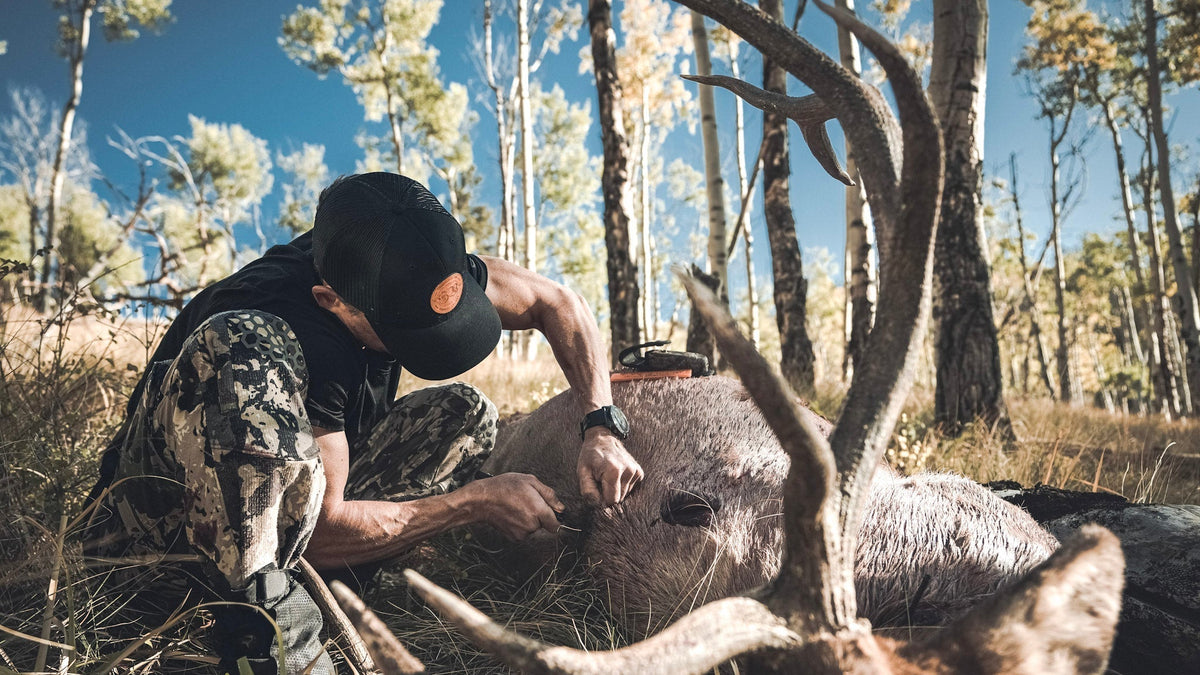
This is the gutless field-quartering method most western hunters use on a downed bull, with the RazorSafe blade and step count integrated. Pack saw or APX optional but recommended for the pelvis.
- Position the animal and start the hide cut. Roll the bull onto its side. Make a long cut from the back of the head down the spine, then a perpendicular cut down each leg. 350 drop-point.
- Peel the hide from one side. Work the hide off the upper side completely. Hide cuts dull a blade fast on a bull. Swap to a fresh 350 drop-point if you feel drag. Most hunters burn a blade here alone.
- Remove the front quarter. The front leg has no joint to the body. Lift the leg, find the seam between the shoulder blade and the rib cage, and cut along it. The quarter comes off with the shoulder blade. 350 drop-point.
- Remove the backstrap and tenderloin. Run the blade along the spine on the inside of the rib cage to take the backstrap. The tenderloin sits underneath against the spine, on the gut side. 350 drop-point with a fresh edge.
- Remove the hind quarter. The hind leg attaches at the hip socket. Cut around the ball joint, push the leg back to pop the joint, then cut through the remaining tendons. 350 drop-point. Saw or APX bone saw helps if you want to split through the pelvis instead of working the socket.
- Roll and repeat on the other side. Flip the animal, repeat steps 2 through 5. Plan to burn 2 to 3 more blades on this side, depending on hide condition and how often you contact bone.
- Take the neck and rib meat. Strip the neck meat off the spine and bone. Take the rib meat between the ribs if you intend to use it for sausage or grind. 350 drop-point or 500-code boning blade if you have one on hand.
- Hang and cool the quarters. Get the four quarters off the ground, into game bags, and into the shade as fast as possible. The work is not done when the meat is off the bone. It is done when the meat is cool. Boning out at home or camp is where the 500-code blade comes in.
Blade-pack stocking for an elk hunt
Most elk hunters under-pack blades and then ration them. Wrong move. The blades are cheap. The hunt is not. Stock the trip the way you stock ammo: way more than you think you need.
- Field knife (RazorMax): Pack 4 to 6 fresh 350 drop-point blades, plus 2 to 4 gutting hooks. That is a full 6-pack of drop-points and either a second 6-pack or a 12-pack. Cost: around $25 to $35.
- Processing blade (500-code): Pack 4 to 6 500-code boning blades. You will not use them in the field, but they live in the camp box for the table work.
- Specialty: One 300-code caping blade if you plan to mount the bull. The 300 saves the cape on the head, neck, and shoulders where a 350 is too aggressive.
- Backup: One sealed pack stays in the truck, untouched. The day you need it is the day you are glad you brought it.
Total blade-pack budget for a full elk trip: $20 to $30. Cost of finishing a bull with a dull knife: a ruined hindquarter, an extra hour per side, and a worse hunt. The math is not close.
When to add a Razor APX
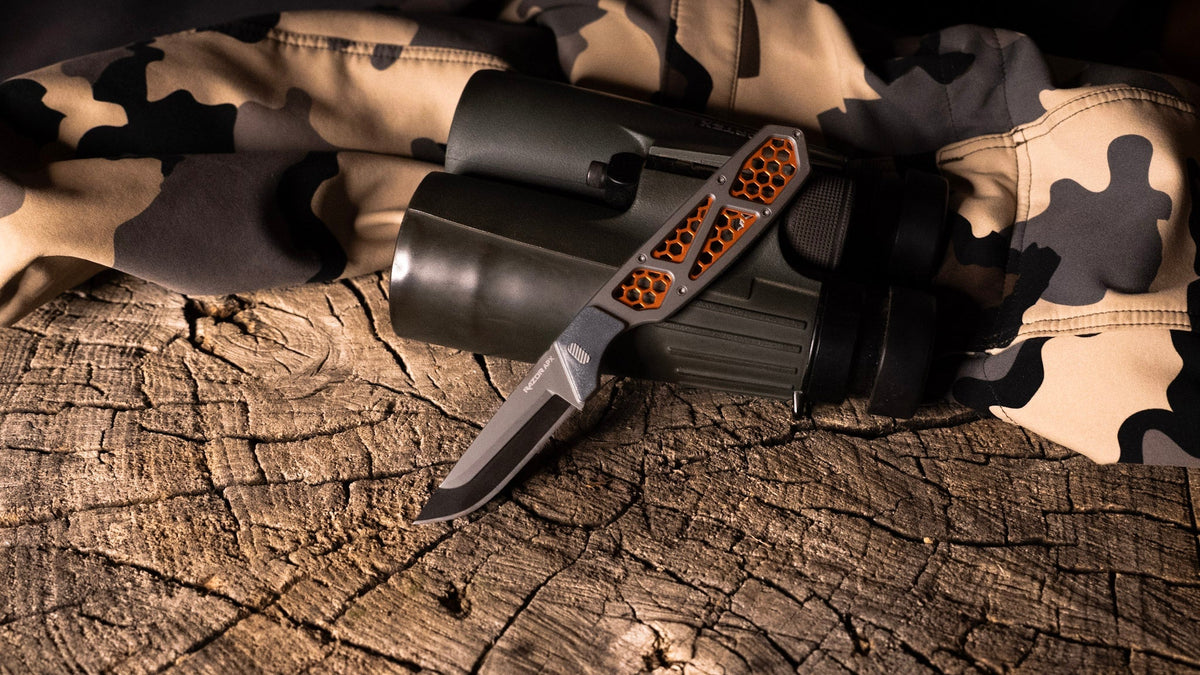
The Razor APX brings a bone saw to the same handle as the knife. For elk, that matters in two specific places: splitting the pelvis to remove the hindquarters as a single unit, and cutting through the sternum on a gut-style field dress. If you do either of those, the APX is worth the addition. If you field-quarter gutless and leave the pelvis with the carcass, you do not need the saw and the RazorMax handles the work.
Some western hunters carry both: a RazorMax for cutting and an APX for the saw head. They share the system but solve different problems. The decision depends on your quartering method, not the size of the bull.
Where to go next
If you have not picked your fixed blade yet, the RazorMax vs RazorLite comparison closes the door on the folding-knife question for elk. If you process at home, the boning workflow applies to elk at scale. The best knife for deer hunting is the simpler answer for whitetail.
RazorMax · 500-code boning blades · Razor APX
Frequently asked questions
What knife do you need for elk hunting?
A fixed-blade hunting knife with a 3 to 4 inch drop-point and a gutting hook is the right field knife for elk. The Outdoor Edge RazorMax with 350-code blades is the most common answer. For processing, add a 500-code boning and fillet blade on a separate handle. Pack 6 to 8 fresh blades minimum. An elk burns through blades faster than any other big-game animal in North America.
Is the RazorMax strong enough for elk?
Yes, for cutting tasks. The RazorMax is the strongest knife in the RazorSafe lineup. The 350-code blades run 420J2 stainless at RC 57. They handle skinning, quartering, and disjointing on a bull without issue. They are not designed for prying or batoning. If you split the pelvis or sternum, use a saw or the Razor APX bone saw head. Do not lever the spine of the blade against a joint. For the full breakdown of what the platform can and cannot take, see are replaceable-blade knives strong enough for big game.
How many blades does it take to process an elk?
Plan on 4 to 6 blade swaps for the field work (skinning, quartering, gut work) and another 1 to 2 for boning at home. A 6-pack of 350 drop-points covers the field. A second 6-pack of 500-code boning blades covers the table. Most elk hunters who under-pack run out around the second hindquarter.
Do you need a bone saw for elk?
Not strictly. The gutless field-quartering method most western hunters use does not require splitting bone. You disjoint at the joints. However, a saw is helpful for splitting the pelvis if you remove the hindquarters as a single unit, or for the sternum on a gut-style field dress. The Razor APX with a bone saw head is the lightweight answer if you want one tool that does both.
Should you bone out an elk in the field?
It depends on pack-out distance and temperature. Boning in the field cuts your pack weight by 30 to 40 percent because you leave the bone behind. The tradeoff is cleanliness, cooling, and meat care. For a 5 mile pack-out in cold weather, bone in the field. For a short pack-out or warm weather, leave it bone-in and process at camp or home where you can keep the meat clean.
What's the difference between a deer knife and an elk knife?
For Outdoor Edge replaceable-blade knives, the answer is blade size. A whitetail can be processed with a 250-code blade on a RazorLite. An elk needs the bigger 350-code blade on a RazorMax for the spine strength on disjointing and the length for skinning a hindquarter in one pass. The handle ergonomics also matter more on elk because you are working through the day instead of for an hour. Buy the bigger fixed blade.
Author: Outdoor Edge Pro Staff. 2026-08-18.

Leave a comment
This site is protected by hCaptcha and the hCaptcha Privacy Policy and Terms of Service apply.