

How to Dispose of Used Razor Blades Safely
Last updated: October 2026Used RazorSafe blades should be disposed of in a way that protects the next person who touches the trash. The simplest method is sliding the used blade back into the PVC cover that ships with the pack, then placing the covered blade in a rigid sharps container before disposal. Here are the safe options.
Why disposal matters more than you think
A used RazorSafe blade is still a factory-sharp blade. Edge retention has dropped, not edge presence. The blade that just dragged through deer hide will still slice through a kitchen trash bag, a sanitation worker's glove, and a hand reaching into a trash can. The question is not whether the blade is dangerous after use. It is whether you packaged it so the next person never has to find out.
Sanitation crews see thousands of needles and blades in residential trash every year. Most are loose, unmarked, and stuck through a bag in a way that injures the person who lifts it. Your blades should never be in that pile.
The PVC cover's real purpose
Hunters often throw the PVC covers out with the empty packaging without thinking about what they are for. Save them. The cover is the cheapest, simplest, and most effective protection between the used edge and everything else in the trash stream. A new blade arrived in one. A used blade should leave in one.
The cover snaps onto the blade by friction. Slide the used blade straight into the cover from the spine end, the same way it came out. The cover holds it securely. The cover is reusable for a small number of cycles before the friction loosens.
5 safe disposal methods (ranked best to worst)
The full recommended method walks the blade from a used handle to a final container in five steps. Each step keeps the edge enclosed.
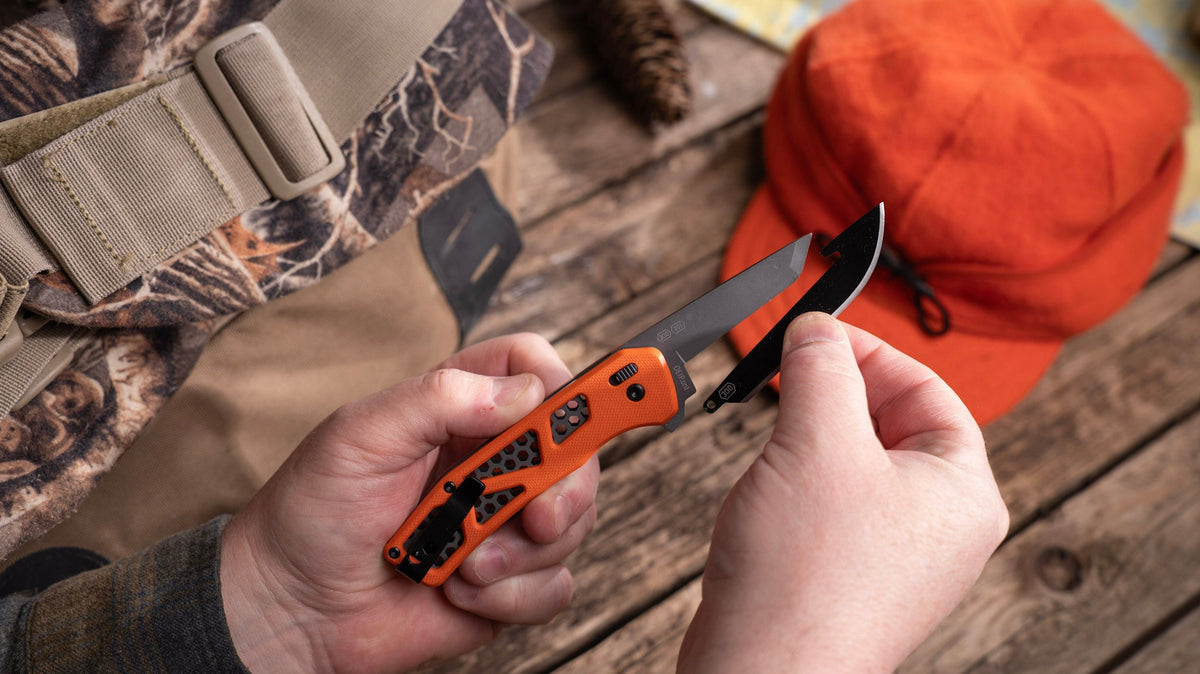
- Release the blade from the handle. Push the blade release button, grip the tip of the blade, slide the blade off. Keep the cutting edge pointed away from your body and away from anyone next to you.
- Slide the used blade into a PVC cover. Use the cover that shipped with the replacement blade. The same cover that protected the new blade in the pack now protects the spent one. Snap it on by the spine end.
- Drop the covered blade into a rigid sharps container. A purpose-built sharps container (drugstore or vet supply) is the gold standard. A heavy-walled plastic detergent bottle with a screw cap works as a substitute. Coffee cans are second-tier because the lid can pop off in compaction.
- Cap and label the container. When the sharps container fills, secure the lid with tape and write "USED BLADES" in marker on the side. This is the line between "disposed safely" and "hidden in the trash for someone else to find."
- Dispose per local rules. Many municipalities accept household sharps with regular trash if rigid-containerized and labeled. Others require drop-off at a pharmacy, transfer station, or hazardous-waste day. Check your city's sanitation page once. It takes 90 seconds.
In the field vs. at home
Field disposal is staging, not final disposal. The goal is to keep the blade contained until you get home, not to deal with it permanently at the truck. The covered blade goes into a labeled side pocket of the pack, a small rigid container in the cooler, or a Tupperware in the truck. It does not go in a gut bag, a bagged hide, a snack pocket, or loose in a glove box.
At home, the covered blade transfers from the field container to the household sharps container. Final disposal happens on trash day or on a drop-off run. Two-stage handling keeps the blade contained from the swap to the curb.
Disposal methods comparison
| Method | Safety rating | When to use | Why |
|---|---|---|---|
| Rigid sharps container | Best | Daily processing volume, household with kids or pets, anyone serious about safety | Purpose-built. Puncture-resistant walls and lockable lid. |
| PVC cover plus heavy tape | Good | One-off swap, no sharps container handy | The cover blocks the edge, the tape locks the cover on. Works in a pinch. |
| Coffee can or detergent bottle | Acceptable | At-home substitute for a sharps container | Rigid enough to resist compaction, but the lid can pop. Tape it shut. |
| Direct to trash, no cover | Unsafe. Do not do this. | Never | Cuts sanitation workers, cuts pets, cuts kids, cuts you on a second pass. |
What sanitation workers wish hunters knew
Three things, every time:
- Label the container. "USED BLADES" or "SHARPS" in clear writing. The crew picking up your trash should know what is inside before they touch it.
- Do not bag and toss. A blade through a plastic bag is the same problem as a loose blade. The bag does not protect anything.
- Do not mix with food waste. Blades stuck in compost or organic-waste bags end up in a sorting line where workers reach in by hand.
Dos and don'ts
| Do | Don't |
|---|---|
| Save the PVC covers from every blade pack | Throw the covers out with the packaging |
| Cover the blade before it touches anything else | Set a used blade on a tailgate or counter |
| Use a rigid, labeled sharps container at home | Throw blades loose into a kitchen trash bag |
| Stage the blade in a field container until home | Leave a used blade in a gut bag or game bag |
| Check local sharps disposal rules once | Assume curbside trash is universally acceptable |
Where to go next
If you have not already mastered the swap itself, read how to safely change a RazorSafe blade in the field. For long-term handle care, see RazorSafe knife care and maintenance. To stock blades for the season, browse the RazorSafe replacement blades collection. Every pack ships with the PVC covers you need.
Frequently asked questions
How do you dispose of used razor blades?
Five steps. Release the blade from the handle. Slide it into the PVC cover that shipped with the replacement. Drop the covered blade into a rigid sharps container. Cap and label the container "USED BLADES." Dispose per local sanitation rules, which may be curbside trash or pharmacy drop-off depending on your city.
What is the PVC cover that ships with RazorSafe blades for?
Two jobs. It protects the new blade in the pack before use. It protects everything else after use. Slide the used blade back into the cover the moment it comes off the handle. The cover snaps onto the blade by friction at the spine end. Save every cover from every pack.
Can you throw used razor blades in the trash?
Yes, if they are inside a rigid sharps container with the lid taped shut and the outside labeled. No, if they are loose in a kitchen bag or wrapped only in paper. Many municipalities accept household sharps with regular trash if rigid-containerized. Some require drop-off. Check your local rules.
Is there a recycling option for used razor blades?
Most curbside recycling programs do not accept used blades for steel recovery because of the handling risk. Some scrap-metal yards will take them in a labeled rigid container. Most hunters dispose of blades through the household sharps stream rather than recycle them.
What's the safest way to dispose of a used blade in the field?
Slide the used blade into the PVC cover from the replacement pack. Put the covered blade in a labeled side pocket of your pack or a small rigid container in the truck. Move it to the household sharps container at home. The field stage is containment, not final disposal.
Can you reuse the PVC blade cover?
Yes, for a small number of cycles. The cover holds by friction on the blade spine. After several swaps, the friction loosens and the cover no longer snaps on securely. When that happens, retire the cover and use a fresh one from the next pack.
Author: Outdoor Edge Pro Staff. 2026-10-28.

Leave a comment
This site is protected by hCaptcha and the hCaptcha Privacy Policy and Terms of Service apply.